Water gets more dense as it gets colder until it hits a temperature of about 35. Then it begins to expand. Without this principle a lake would have to freeze solid before it would freeze at all. But as the water expands it moves to the top layer where it can continue to expand until it freezes.
Since the top of the lake is now frozen, any additional ice must form below the ice level as to layer up from the bottom of the ice up. Since the ice is now lighter than the surrounding water it sits upon, then it actually floats on the water.
As more and more ice forms it gets very strong and continues to expand in EVERY DIRECTION.
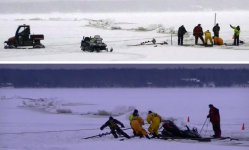
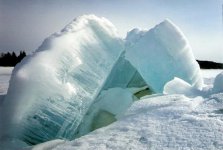
Once there is no place for the ice to expand it will push a "bridge" in the ice in an effort to continue to expand. But once the ice heaves upward it forms a natural insulating layer of ice over water with pocket of air between. Little if any ice forms under the heaved layer because of this. The natural weight of the bridge can cause it to fall at various times to create open water ice floats. While it will freeze pretty quickly if the temp is cold enough, this period in time makes this a real hazard to skiers and ice fishermen and snowmobiles. Since the expansion can happen over a half hour period or even less, running on lakes all winter long in cold weather where the lake is still creating ice will be a hazard. In the spring when the temps start warming, ice is not being made and this process stops.
During a normal winter with lots of snow, the weight of the snow will actually cause the ice to sink and water will find it's way thru expansion cracks up over the layer of ice forming a slush layer which can re freeze again. This can happen over and over as more and more snow is added. Every ice fisherman knows this layering and is why you need to drill thru many layers in late winter to get all the way thru to the lake. This layer process often slows down or stops the heaving process because the whole layering of the ice is not as strong as solid ice and is not as likely to be as buoyant either. Of course this winter has been fairly snow-less so there is very little if any layering so stronger ice and expansion is happening rapidly...all the main ingredients to cause these bridges to form.