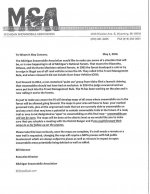
Thank you Tim Kobasic for another well written article!
Remember join a local ORV and/or Snowmobile Association along with MSA to help in preserving our riding opportunities. Enjoy the read:
Trails & Tales Journal 06/03/16
“Snowmobiling Could Be Further Restricted in National Forests”
(All Rights Reserved)
This time of year most people who enjoy the great outdoors are in the camping, (paddle and motorized) boating, hiking and (biking and ATV/ORV) riding mode. Little do most realize that this is the time when our awareness of what goes on behind the scenes related to winter sports is equal to that of a hibernating bear.
Thank goodness the representatives of Michigan based recreation associations are at work on our behalf, serving as watchdogs in protecting the interests of their members, especially when special interest parties attempt to disturb the opportunities deserved by those who contribute to natural resources management both financially and as volunteers.
If you've ever wondered where some of the rules and procedures regarding the recreational use of our national forest come from, here's a good example.
The US Department of Agriculture Forest Service (USFS) is charged with managing Michigan's Hiawatha, Huron-Manistee and Ottawa National Forests. They are linked with a network of other national forests across the United States that came into existence thanks to the foresight of the Theodore Roosevelt's in the early 1900's.
The USFS directives consist of the Forest Service Manual and Handbooks, which organizes the agency's policy, practice, and procedure. The system serves as the primary basis for the internal management and control of all programs and the primary source of administrative direction to employees.
Federal agencies operate under the U.S. Code and the Code of Federal Regulations. These laws help form our directives and policies on how we manage national forests and grasslands, Even Smokey Bear and Woodsy Owl, Forest Service symbols of wildfire prevention and conservation, are protected by law.
If one has an understanding of how the system is set up, it is possible to appreciate that in this instance, the bureaucracy is one of the most detailed in natural resources management.
Whenever a review or pending change in use regulations are underway, the USFS conducts periods for public input and any perspective shared is considered in the process. As in hunting, there are factions out there with names that give one the impression they're all about conservation, but in reality are anti-public use and find caveats within the laws and regulations to disrupt some allowable uses by either making more restrictions or total elimination of use.
As an example, five years ago there was a ruling issued on the initiative of an individual with recreational property within the Huron-Manistee National Forest. He didn't like snowmobiles or firearms and sought to use the legal process to stop their use. A U.S. Court of Appeals decision was cause for the USFS to take comments on two proposed alternatives related to snowmobile use and firearm use in semi-primitive non-motorized areas and firearm use in or near primitive areas. Near is the catch-word in this effort.
Then, the Michigan Snowmobile Association (MSA) and Michigan United Conservation Clubs (MUCC) were at the forefront to defeat changes to further restrict use beyond then current acceptable activities.
Going back as far as 2005, the USFS was addressing a problem with illegal use of off-road vehicles across the U.S. A new rule, the Travel Management Rule (TMR), was developed. Again, this is a national shift but did not include snowmobile restrictions listed under the category of Over Snow Vehicles (OSV).
Fast forward to 2001, where a non-motorized 'quiet use' group from Idaho filed a lawsuit claiming that snowmobiles should not have had an exclusion. The presiding judge concurred and snowmobiles were put back into the TMR. The USFS has been working on the plan and is now rolling it out to the forests.
As implemented snowmobile use in the forest will have to have marked groomed trails, plus all the ungroomed roads that we are currently able to snowmobile on and any areas that may have a potential to contain snowmobile trails in the future will also have to specifically marked. If not designated as 'open' to snowmobiling on this final map – use will not be open. Changes thereafter will also require a National Environmental Protection Act review with full public involvement which are always subject to pluses as well as minuses in respect to open snowmobile areas potentially being deleated as well as added.
Those of use who are always engaged in scientific wildlife management have to combat anti-hunters who profess for be engaged on behalf of animal welfare. It has been proven time after time that these tax free entities are mostly in the business of raising money to support themselves with very minimal use of funds for animal care.
In the case of potential increased snowmobile restrictions the Winter Wildlands Alliance (WWA) (who are “silent snowsports” advocates), were involved in the 2005 court action. It is their contention that their purpose is to establish plans for winter motorized use that are consistent with vehicle use in all other seasons.
The problem with this mindset is that snowmobiles are not as invasive to the forest environment as other motorized riding sports. They are used in a period of snow cover where the ground story is protected. Connection from private land to those public trails and routes is essential for some to participate and it is believed that added restrictions will do nothing for the environment, but will have a huge negative impact on snowmobiling and thus hurt the local tourism commerce.
If all this isn't frightening enough, consider that the USFS is now dealing with loss of road maintenance funding and is now considering the future of road use involving recreation in the Travel Management Rule.
Trails & Tales Journal 06/03/16
“Snowmobiling Could Be Further Restricted in National Forests”
(All Rights Reserved)
Visit
www.algersorva.com for our membership information and form.