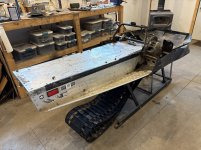
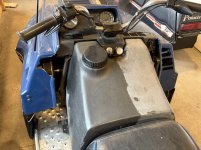
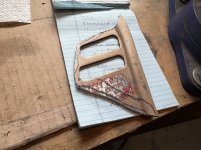
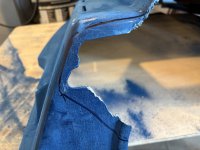
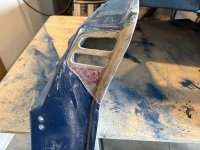
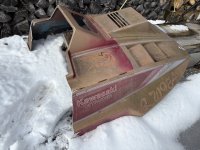
Kawa-Bunga! A Project Sled for 27

hermie

Well-known member
Looks like that set-up would really cut back on engine vibration through the chassis. Very interesting set up. Personally I always liked the Kawasaki invaders. Ran good for back in there day. I remember the next door neighbor to my grandparents had a couple of Invaders while I was on a Johnson rotary and a scorpion stinger 3. I was trying to talk my grandparents into getting one but that didn't go anywhere.😜
 

skiroule

Well-known member
Looks like that set-up would really cut back on engine vibration through the chassis. Very interesting set up. Personally I always liked the Kawasaki invaders. Ran good for back in there day. I remember the next door neighbor to my grandparents had a couple of Invaders while I was on a Johnson rotary and a scorpion stinger 3. I was trying to talk my grandparents into getting one but that didn't go anywhere.😜
I think you might make a good point here. This sled has a smooth feel to it and some of that may be due to improved vibration dampening.

I haven’t run into anyone that owned an Invader or knew someone that had one that doesn’t say these were very fast for the time-period. The Intruders are not in the invader’s league but they’re no slouch either. When you get on the throttle and that motor starts pulling from all three carb jets, it’s still fun (that’s right, the carbs on the Intruders used a third jet, in addition to the pilot and main).

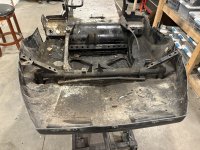
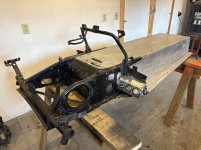
Rear suspension is removed and even though all the chassis bolts/nuts I've encountered are SAE, the suspension mount bolts are metric. Strange.
IMG_4613_1.jpg
 

skiroule

Well-known member
Yes, I guess Mikuni called them “Powerjet” carbs but Kawasaki used the term “Econojet”. As I understand it, the goal was to improve mileage while maintaining performance.

The main and pilot jets operate as they normally do on Mikuni’s. The third jet (aka econojet) is a somewhat different type jet and is located in the bowl. This jet feeds fuel directly into the carb venturi via a line from the bowl. The rate of fuel delivered through this jet is determined by the air flow through the carb.

According to Kawasaki, this jet only comes into play over ½ throttle and is most effective at wide open throttle. I’m not sure where the economy aspect comes in but maybe it’s below ½ throttle because it allows for a smaller main jet, which usually comes into play earlier at about ¼ throttle. The smaller main can be seen in the specs, which are as follows:

LH cylinder: pilot – 25, econojet – 130, main – 140
RH cylinder: pilot – 25, econojet – 120, main – 140

This is a concept that I had never heard of before I bought this sled.

On a somewhat humorous note, Kawasaki doesn’t call the choke a choke. They call it a “Enrichener Circuit.” Very impressive sounding.
 

euphoric1

Well-known member
Technically.... a plunger type choke set up is more of an enrichener more so than a choke because you are not "choking off" the air supply to privide a fuel charge required for starting, where as an enrichener is only providing an "enriched" fuel charge for starting, so in retrospect...Kawasaki had it right LOL! "3rd" jet sounds more like and attempt to help with midrange slump round slides were notorious for, better fuel economy as result of not having to lay into throttle as hard to get past it in a 2 jet system?
 

skiroule

Well-known member
In today’s world they might have called it “Viagra Circuit” 😂
Conversely, companies could be marketing “Enrichener Pills.” Sounds so much better.

Technically.... a plunger type choke set up is more of an enrichener more so than a choke because you are not "choking off" the air supply to privide a fuel charge required for starting, where as an enrichener is only providing an "enriched" fuel charge for starting, so in retrospect...Kawasaki had it right LOL! "3rd" jet sounds more like and attempt to help with midrange slump round slides were notorious for, better fuel economy as result of not having to lay into throttle as hard to get past it in a 2 jet system?
Yeah, you’re technically right Brian. The plunger setup is a whole different deal. I also thought the same about mid-range but what’s curious is that it feels to me like the sled is a little flat in the mid-range. My friend who also has an Intruder has made the same comment.

Now it could be that the carbs on both our sleds need maintenance. I have cleaned the jets on mine but have not boiled the carbs and he has done neither. It’s probably not a factor but the throttle pull on mine is way out of adjustment so it’s hard to even get a feel for where half-throttle is. We'll see how it runs when everything is refreshed and properly adjusted.

BTW, sold the 250 TX today, about 2 hours after posting it. People love that sled. Hate to see it go but it provides an injection of cash that I'll be using to begin ordering parts.
 

skiroule

Well-known member
This installment is a l little longer than usual but I thought it necessary to give everyone a good idea of what goes on in the shop some days.

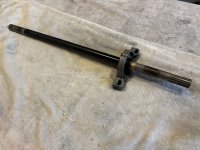
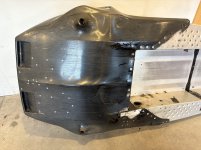
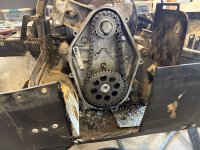
The task for the other night was driveshaft/track removal. The first step seemed simple enough: remove the chain and gears but between a generous amount of factory Loctite and about 80 lbs. of torque, I could see that the lower gear bolt wasn’t going to budge without an impact wrench. There wasn’t enough room to get straight-in access with the impact wrench so I cut out a “small” section of pan to allow access. Problem solved. And you thought I was a patient man.
IMG_4614_1.jpg

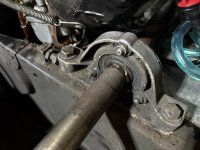
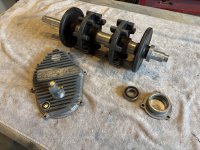
Kawasaki took a little different approach to the speedometer drive assembly. Rather than mount the drive on the clutch side, which was common, they mounted it in the chaincase cover. On the other end of the shaft was just a bearing and bearing housing.
IMG_4679_1.jpg

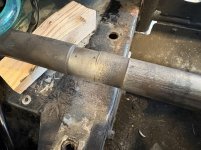
Problem was, the bearing on the clutch side of the shaft was pressed on the shaft and the housing was pressed on the bearing. Even though the shaft allowed some lateral movement there didn’t seem to be any way to get any kind of leverage to remove either the bearing or the housing with the shaft still in the sled. Prying, pounding and a puller were out of the question.

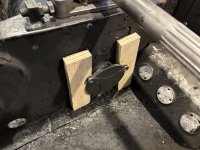
After some hard thinking, I came up with a solution. I figured that since there was some ability to move the shaft, I could shim the housing against the tunnel so the shaft was recessed in the chaincase by the thickness of the shim. I thought 5/8” plywood would do the trick.
IMG_4615_1.jpg

On the chaincase side, I found a socket that matched the bearing center diameter, a longer shaft bolt, and some washers. The idea was to thread the bolt into the driveshaft, tighten it against the socket, chaincase bearing, and chaincase to pull the driveshaft towards the chaincase, thereby either pulling the shaft out of the bearing on the other end or the bearing out of the housing. I didn’t care which.
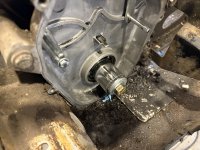
IMG_4616_1.jpg

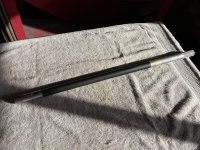
I thought it moved a little on the first torque-up with a rachet so I backed it off and added a couple more washers. On the second try, pow! The bearing let loose from the housing. Once the housing was off on the clutch side, there was plenty of room to fit the bearing through the hole in the tunnel and the shaft and the track came out in about 3 minutes.

 
Top